



FIRE SAFETY IN THE EDUCATION SECTOR

// School Fire Safety

Protecting Students, Staff and Campuses Across the UK

In schools, colleges and universities, fire safety is not just a legal obligation — it’s a duty of care. Educational settings face unique challenges: complex buildings, high occupancy, varied activities and often aging infrastructure. At Assured Fire Safety Consultancy, we help education providers meet their compliance duties under the Fire Safety (England) Regulations 2022 and the Regulatory Reform (Fire Safety) Order 2005, creating safe and compliant learning environments.

School Fire Safety
Our valuable clients:
// Why Fire Safety Matters

The Importance of Fire Safety in Education

01

Protecting Lives

Educational premises are busy environments with hundreds or even thousands of occupants. Effective fire safety management ensures safe evacuation, reduces risk of injury, and protects lives during emergencies.

02

Ensuring Compliance

All schools and higher education institutions must comply with UK fire safety legislation — including the Regulatory Reform (Fire Safety) Order 2005, Building Regulations, and guidance such as BB100 (Design for Fire Safety in Schools). Compliance not only avoids enforcement actions and penalties, but also demonstrates strong governance and accountability.

03

Preserving Property and Continuity

From libraries and laboratories to IT suites and heritage buildings, educational facilities contain valuable assets. Robust fire safety measures safeguard property, minimise downtime, and maintain continuity of teaching and learning.

04

Supporting a Safe Learning Environment

A secure and well-maintained school environment helps pupils and staff focus on education without safety concerns. Fire safety plays a key role in fostering confidence, wellbeing, and operational excellence.

// Challenges for Schools & Colleges

Common Fire Safety Challenges for Schools & Colleges

Complex Building Layouts

Multi-block or multi-storey campuses often require detailed fire strategies and compartmentation checks.

High Occupancy Levels

Managing safe evacuation for large numbers of people, including pupils with special educational needs or mobility challenges.

Varied Activities

Laboratories, kitchens, art rooms, and sports halls all carry different fire risks requiring tailored controls.

Aging or Converted Buildings

Many older schools and colleges were not built to modern fire safety standards, demanding specialist assessment and upgrades.

// How Assured Can Help

How Assured Fire Safety Consultancy Can Help

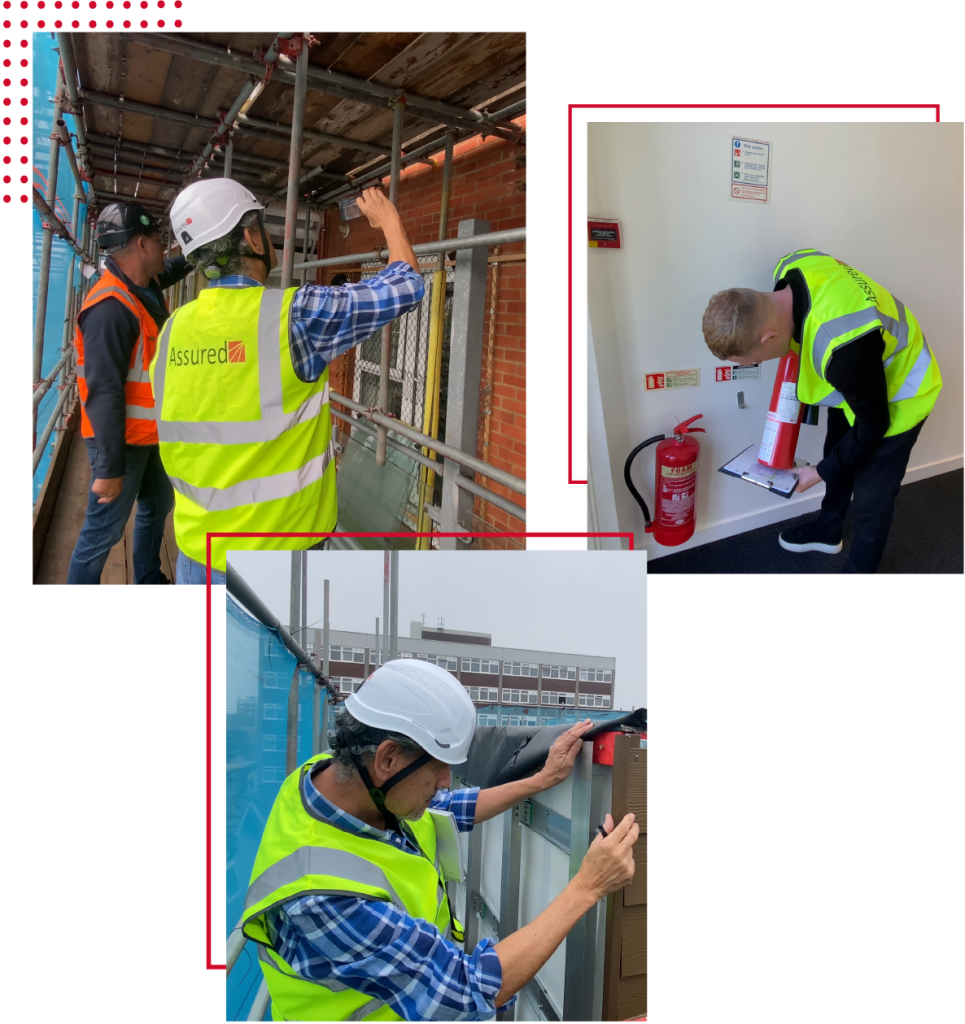
At Assured, we work closely with schools, academy trusts, colleges and universities nationwide to ensure full compliance and lasting safety assurance.

Comprehensive Fire Risk Assessments

We carry out Fire Risk Assessments (FRAs) in line with PAS 79 and BS 9792:2025, identifying potential hazards and providing practical, prioritised recommendations for compliance.

Fire Strategy & Fire Engineering

Our fire engineers design or review Fire Strategy Plans to optimise building safety — including compartmentation, escape routes, and system design in accordance with BS 9999 and ADB guidance.

Fire Door Inspections

We conduct detailed fire door inspections in accordance with LPCB 1197 / 1271 and FDIS standards. Properly maintained fire doors are vital for containment and safe evacuation.

Fire Safety Training for School Staff

We deliver CPD-accredited Fire Safety Training to empower staff with the knowledge to manage day-to-day fire precautions. Training covers:

  • Legal responsibilities and Fire Safety (England) Regulations 2022
  • Fire door checks and maintenance
  • Emergency procedures and evacuation drills
  • Record-keeping for compliance and audits

Ongoing Compliance Support

Our consultancy provides scheduled inspections, audits, and maintenance programmes to ensure continuous compliance — adapting to building changes or new regulatory updates.

// How It works

Our DSEAR Assessment Process

Consultation

Review your operations, materials, and current safety controls.

01

Site Inspection

Identify dangerous substances and evaluate control systems.

02

Hazardous Area Classification

Define zones in line with BS EN 60079 and HSE guidance.

03

Assessment & Recommendations

Quantify risks and propose proportionate actions.

04

Reporting & Support

Deliver a clear, digital DSEAR report with practical improvement guidance.

05
// Why Choose Assured?

Why Choose Assured?

01

Independent, impartial and BAFE SP205-certified consultancy

02

Expertise across primary, secondary, and higher education settings

03

Nationwide coverage with qualified Tier 3 fire risk assessors

04

ISO 9001 quality-assured processes

05

Trusted by academy trusts, local authorities, and universities

06

Professional, practical, and cost-effective compliance support

// Why Choose Assured

Why Choose Assured Fire Safety Consultancy?

Unlike manufacturers or contractors, we are independent and impartial. That means our guidance is always focused on your compliance and safety — never on selling additional products.

// Why Choose Assured

Why Choose Assured Fire Safety Consultancy?

We combine technical knowledge with practical experience to deliver impartial, professional, and supportive DSEAR assessments. Our reports provide clarity, confidence, and compliance — ensuring your people, property, and operations remain safe.

Certified Expertise

Third-Party Accredited

Integrated Solutions

Trusted Nationwide

// Frequently Asked Questions

DSEAR Knowledge Hub

Professional insights from our process and fire safety specialists.

  • What is a DSEAR Assessment?

    A DSEAR assessment identifies and controls risks from dangerous substances that could cause fire, explosion, or corrosion, ensuring compliance with the Dangerous Substances and Explosive Atmospheres Regulations 2002.

  • Who needs a DSEAR Assessment?

    Any business that stores, handles, or uses flammable or explosive substances — from industrial plants to laboratories and workshops — must complete a suitable and sufficient DSEAR assessment.

  • What is Hazardous Area Classification?

    HAC defines where explosive atmospheres may occur and the frequency of their presence. Zones 0, 1, and 2 (gases/vapours) and 20, 21, and 22 (dusts) determine the safety controls and equipment requirements.

  • How often should DSEAR Assessments be reviewed?

    Every three to five years, or sooner if there are significant changes in materials, processes, or plant layout.

  • What does the DSEAR report include?

    A clear summary of identified hazards, zone maps, photographs, and prioritised recommendations — giving you a practical action plan for compliance.

// Our Clients

Our Education Clients Include

Speak to a Fire Safety Expert

Create a safer learning environment with Assured.
Our consultants help schools and academies nationwide meet fire safety regulations with confidence and ease.